




The Hidden Cost of Doing Dishes by Hand (It’s Not What You Think)
Most people think the cost of washing dishes is water, electricity, or time.
But the real cost is something you don’t usually calculate.
It’s the moment you miss because your hands are in the sink. It’s the conversation you’re half-listening to while scrubbing a pot. It’s the time you could’ve spent laughing with your kids, resting on the couch, or finally doing something just for yourself.
The truth is simple: handwashing dishes doesn’t just take time—it quietly takes moments away from your life.
And most of us don’t notice it happening until it becomes routine.
“It’s 8pm, and you’re still not really present”
Picture this.
It’s 8pm. Dinner is done. The house is finally quieting down. Your kids are asking you to play a game, or show you something they’ve been excited about all day. Maybe your partner is sitting in the lounge waiting for you to join them for a show.
But instead, you’re standing at the sink. Hands in warm, soapy water. Rinsing. Scrubbing. Drying. Repeating.
You tell yourself it will only take a few minutes. But it stretches. Plates pile up. Pots need soaking. Glasses need careful washing. And before you know it, 30–45 minutes are gone.
By the time you’re done, the moment you were invited into has already passed.
The game is over. The episode is halfway watched. The energy in the room has shifted.
And all you did was wash dishes.
The real hidden cost: opportunity, not money
When people talk about chores, they usually think in terms of effort or utility bills. But the real cost of handwashing dishes is opportunity cost—what you could have been doing instead.
If you spend just 30–60 minutes a day washing dishes by hand, that adds up to around 3 to 7 hours a week.
Now think about what that time actually represents.
That’s:
- A full movie night every week
- A few uninterrupted play sessions with your children
- A proper gym session or walk you keep postponing
- Time to read, game, or simply switch off mentally
- Even just sitting in silence without doing anything for once
In a busy South African household where work, commuting, Power outages, and family responsibilities already take up most of the day, that time is not small. It’s one of the few pockets of life you actually get back for yourself.
And handwashing quietly takes it away every single day.
Why it feels heavier than it should
On paper, washing dishes doesn’t seem like a big task. It’s repetitive, familiar, almost automatic.
But that’s exactly what makes it powerful, it blends into your routine without you questioning it.
In South African homes especially, evenings are already compressed. Power outages can shift dinner times, routines are adjusted around electricity availability, and family schedules are often tightly packed between work and school.
So when dishwashing enters that space, it doesn’t feel like a standalone task. It becomes the final layer of an already long day.
And because the kitchen is usually still visible in open-plan homes, the mess acts like a constant reminder that the day isn’t really over yet.
That mental load is what makes it exhausting not just the physical washing itself.
The life you don’t realise you’re trading away
The most important part of this conversation isn’t about dishes at all. It’s about what doesn’t happen because of them.
While you’re cleaning up, life is still happening elsewhere in the house.
Your kids are growing up.
Your partner is waiting to connect with you.
Your own interests are being pushed to “later.”
But “later” often turns into tomorrow. Then next week. Then never.
This is how small daily routines quietly shape bigger lifestyle outcomes.
Not through dramatic decisions but through repeated trade-offs.
And dishwashing is one of the most consistent ones.
When home cooking becomes something people avoid
There’s another hidden layer here that many families don’t talk about.
People don’t avoid cooking because they don’t like food.
They avoid it because they don’t like what comes after.
The mental image of a full sink, stacked pots, and a long cleanup session is enough to make takeaway or quick meals feel easier, even when home cooking is healthier, cheaper, and more meaningful.
So over time, something interesting happens:
- Less cooking at home
- More convenience food
- Less shared family time around meals
- More separation between “eating” and “connecting”
And it all starts with avoiding the cleanup.
The shift: from chores to freedom
This is where the story changes.
Because the solution isn’t about washing faster or working harder. It’s about removing the friction entirely.
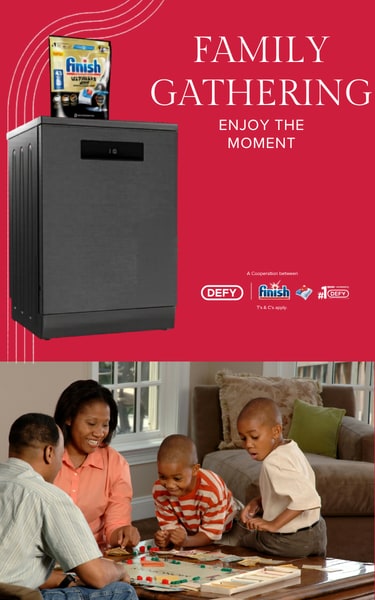
A Defy dishwasher changes the structure of the evening. Instead of ending your day at the sink, cleanup becomes something that happens in the background.
You load the dishes. You press start. And you walk away.
That’s it.
When paired with Finish dishwasher detergent, the result is even more powerful. Tough, dried-on food, greasy pans, and heavily used dinnerware are handled efficiently, so you don’t need to rewash or worry about results.
What used to take 45 minutes of manual effort becomes a quiet automated cycle in the background of your home.
And more importantly, your attention stays where it should be—with your life, not your sink.
What 3 hours a week actually gives you back
If you reclaim just 3 hours a week from handwashing dishes, the change compounds quickly.
In a month, that’s 12 hours.
In a year, that’s over 150 hours.
That’s time that can be redirected into things that actually feel meaningful:
- Being present with your family instead of multitasking in the kitchen
- Resting without feeling like there’s still work waiting
- Building hobbies you’ve been postponing
- Or simply having unstructured time—something most adults rarely get anymore
The important part is not just the quantity of time, but the quality of what returns.
Because those hours aren’t just “free time.”
They’re uninterrupted life moments.
Reframing the dishwasher: not an appliance, but a time investment
Most people think of dishwashers as a convenience upgrade.
But in reality, they function more like a time redistribution tool.
You are not buying a machine that washes dishes.
You are buying back time that would otherwise be spent doing repetitive, low-value tasks.
That shift in thinking changes how you evaluate it entirely.
It stops being a household expense and starts becoming a lifestyle decision.
Final thought: what are you really paying for?
The hidden cost of doing dishes by hand is not water usage or effort.
It’s the moments you don’t get back.
It’s the conversations you step away from.
The hobbies you postpone.
The quiet time that never arrives.
The family moments you’re physically present for but mentally absent from.
And once you see it that way, the question changes.
It’s no longer “how long does dishwashing take?”
It becomes:
What would you do with your time if you didn’t have to stand at the sink every night?
Invest in time with your family, not just appliances for your kitchen.
Explore Defy dishwashers and experience how combining smart appliance design with Finish cleaning performance can turn everyday cleanup into something effortless and give you your evenings back.
